
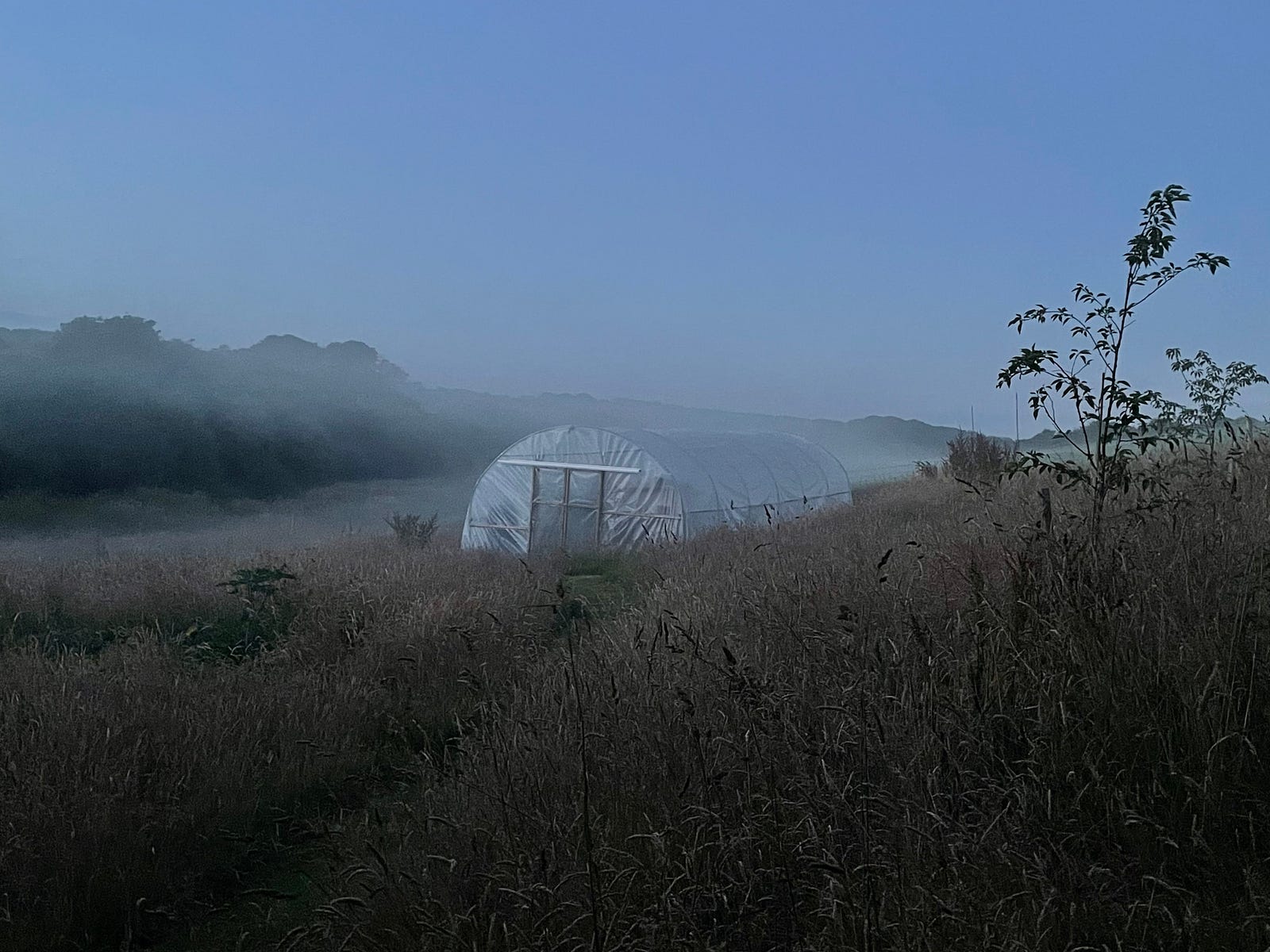
The other day I had a phone called with a loved one — that's a family member. He said we are living in a post-truth world, refering to the state of affairs in the United States of America. I have heard this phrase before and let it slide into the images and sounds of our conversation about life and shacks in the garden and spending time with partners and other idle thoughts about life after 60. My partner enjoys her career and supports me in my deliquence. And my deliquence - I am not retired - is enjoyed with the media back drop of British and American politics, computing and when they let me, our children - you see they are grown-up and we are still infurating.
Post truth. It jars. It remains from the conversation and won't go away. It lies on the shore like a jellyfish after the tide has receeded, desiccating in the sun. Since when was truth a when? a verb, that it could take a temporal adverb? Surely truth is an adjective — an attribute of a fact. It describes a quality of something. That something can also be a lie or half-truth. It can have been true and no longer so. Or are we to assume that truth is nailed to a post — in full daylight for all to see. Is truth what we agree upon or independant of we — something in itself?
Yup, I'm dyslexic and when confronted with words I struggle to signify — I attempt literal, nailed to a post, and then get lost in the soup of grammer which english has so borrowed from other languages that exceptions make up the rules. English is the purest of languages as language meerly allows communication, and as speakers and readers struggle with the phonemes and gliphs of english something comes across, and we are used to struggling, the struggling is the act of communication. If we are both smiling after the fact, then we achieved our goal, we communicated, it doesn't matter what, because of the smiles.
Keats would have us believe that Truth is in the eye of the beholder. For that is all we need to know. Truth is Beauty — and fleeting. Caught in a glimpse — a synedoche glanced, a moment that represents a moving complextity. Is that the problem — talking of temporal things as if they were timeless. Beauty is not a noun — it is a quality of the percieved — not a thing in itself. Art is an activity and for its own sake, but can achieve beauty for some and not others. Truth in this logic is the same and we are not in a Post Truth era, for it has ever been such.
By my own logic a failure of communication would be a lack of smiles on either side. For me the other side is not smiling. It feels cheated, dis-enfranchised, and unwelcome at home. We have embraced others in need and neglected the temper trantrum children of resentment. We have embraced difference and made the same angry that their conformance in not appreciated. So how do you deal with a child acting out its communication physically? You turn and say I hear you. You bring them in and ask them to particiate. You don't smack them, shout at them or send them to their room.
The other day I heared a father in the supermarket angrily ask his child why she had done something he felt was wrong. 'Why d'you do that?'. I turned to see his eight year old daughter cower from him. She was walking along the line of tills with her younger sister and still younger brother between her and her father. He was leaning sideway across the other two, while still pushing the trolly, contorted with rage. To see her cower broke my heart. There could be no love between them, for there was no answer to why, and nothing she could say would bring smiles. Her act was a statement, a speech, an essay. His self absorbed agression would ruin her childhood. He would not enjoy her company, and she not his. A wasted childhood that could have been filled with smiles and laughter, just because he would not listen, engage and allow her to find her voice and envoke his smiles - a failure to communicate.
I asked friends how I could have interveened. They said I could do nothing. For confronting the father would have enraged him and brought her to defend him. She would have then been left with the feeling that she had caused the problem, even though she was the child. The logic is sound, but heart breaking.
Is this not a metaphor? Should we endevour to talk until we can drop Post. We are not listening - not doing something about it. Doing something about what? We have broken the contract of fair - inequality! They don't want all the sweets, just enough to share, enough to feel generous and good about themselves - good enough to feel a part of something everyone is doing. Where are the grown ups in the room? They are my children. I feel guilty letting demographics take the burden of climate, democracy and globalisation. The world I find surprising, they are making - it is their turn - I just hope we have given them the tools to do the job.
So back to Post Truth. I have no idea what my cousin meant, but I recieved a problem. And like all good memes I invite you to be infected with it and join the struggle of its meaning.